Alpine Shire Draft Carbon Offset Policy
Policy Background and Overview
We are committed to operating sustainably. Our commitment to sustainability applies across our organisation, and all aspects of our assets and service delivery. A key action from our Alpine Shire Council Plan 2025-29 included the implementation of our Alpine Shire Climate Action Plan 2025-29 (the Plan).
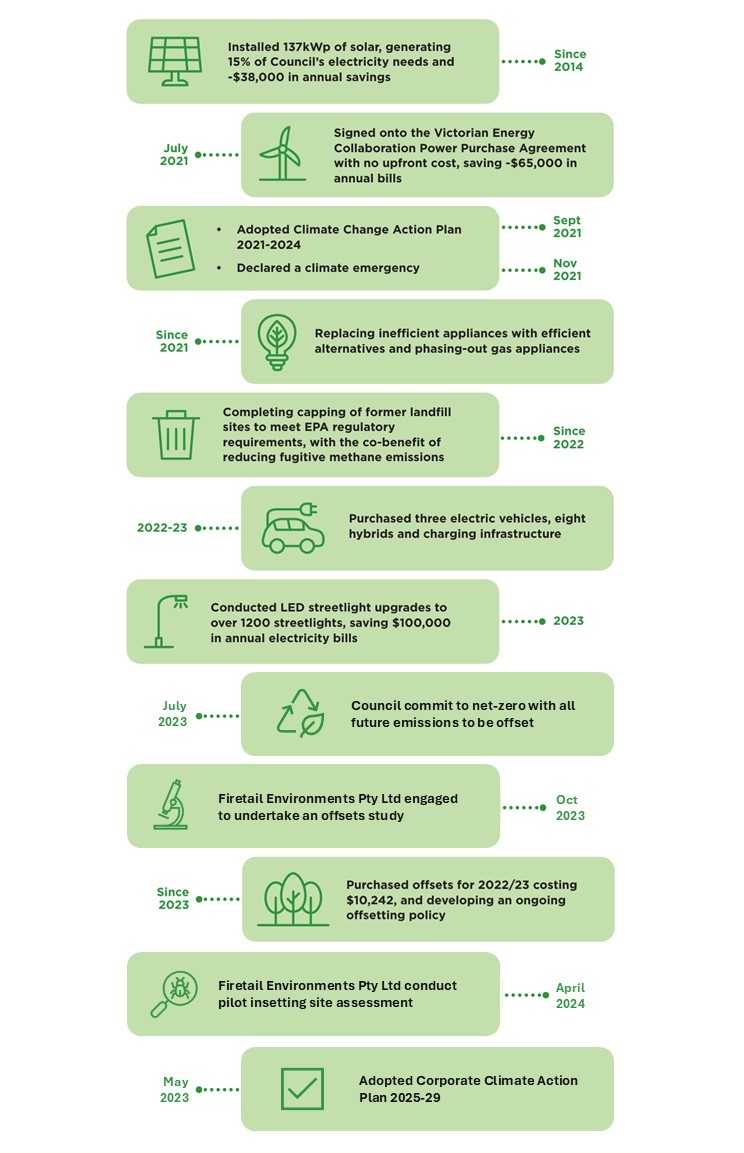
The Plan reflects our ongoing focus on responsible environmental management and recognises the importance of taking practical steps to respond to the climate challenges facing our region. We have put a great amount of effort into reducing our corporate emissions, including fleet upgrades, solar installation, and LED streetlight upgrades, which alone have cut $100,000 from annual electricity bills.
We have been net-zero since 2023, meaning the amount of greenhouse gas emissions we release into the atmosphere are equal to the amount of greenhouse gases emissions we remove. This commitment means that for our residual emissions, the ones that are core to our operations that may be currently too expensive or difficult to reduce, are offset through projects or credits that take carbon and other greenhouse gases out of the atmosphere.
We do not currently have a policy that describes how we will continue to achieve net-zero commitment. The purpose of this engagement is to help us prepare a draft policy that identifies options we can take to achieve our commitment, in a way that most appropriately reflects the values of our communities. This policy will then be put back out for review by our communities and Councillors at a future Ordinary Council Meeting.
Net-zero refers to a state where the amount of greenhouse gases emitted into the atmosphere is balanced by the amount removed.
Carbon offsetting is the practice of compensating for greenhouse gas emissions released by funding or actioning projects that remove the equivalent amount of carbon from the atmosphere.
In a nutshell, carbon offsetting works by:
- Calculating a baseline - measuring the amount of emissions we need to account for.
- Identifying an offset method - this may through purchase of carbon credits, credits that represent carbon sequestration from real projects OR via projects conducted within internal operations.
- Compensating for baseline emissions - by actioning the selected offset method to account for equivalent carbon emissions.
Offsetting is a reduction or removal of greenhouse gas emissions that compensates for emissions released elsewhere, e.g., purchasing carbon credits.
Insetting is a method of offsetting where greenhouse gas emissions reduction projects are undertaken within an entity’s own value chain or operations to compensate for residual emissions, e.g., undertaking tree planting within our municipality.
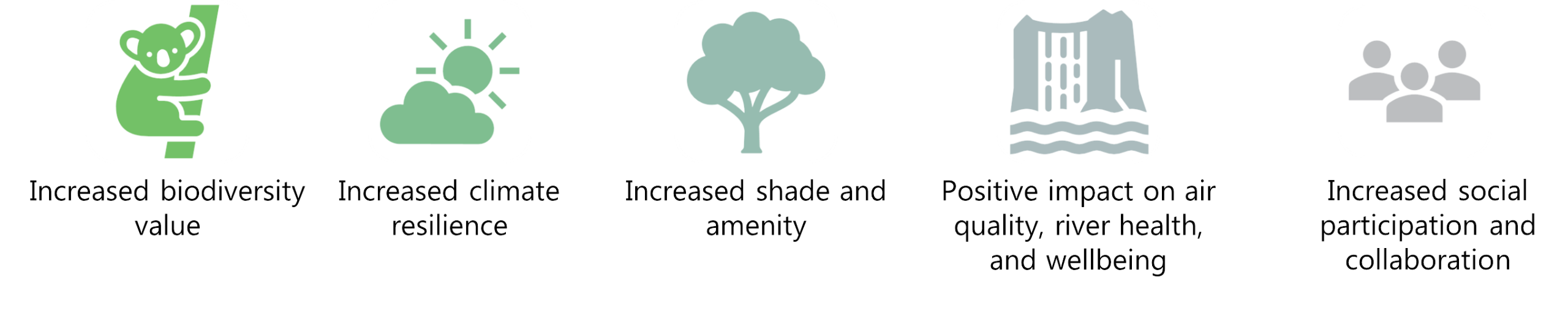
Co-benefits of insetting include:
There are numerous ways that greenhouse gas emissions can be offset. Two key methodologies have been identified by council officers as most relevant for Alpine Shire’s context. These include:
- Purchase of carbon offset credits
- Local planting projects
It is likely that a combination of methods will be used to best reflect budget, climate conditions, and community need; however, we are wanting to identify which methods are most and least supported by our communities.
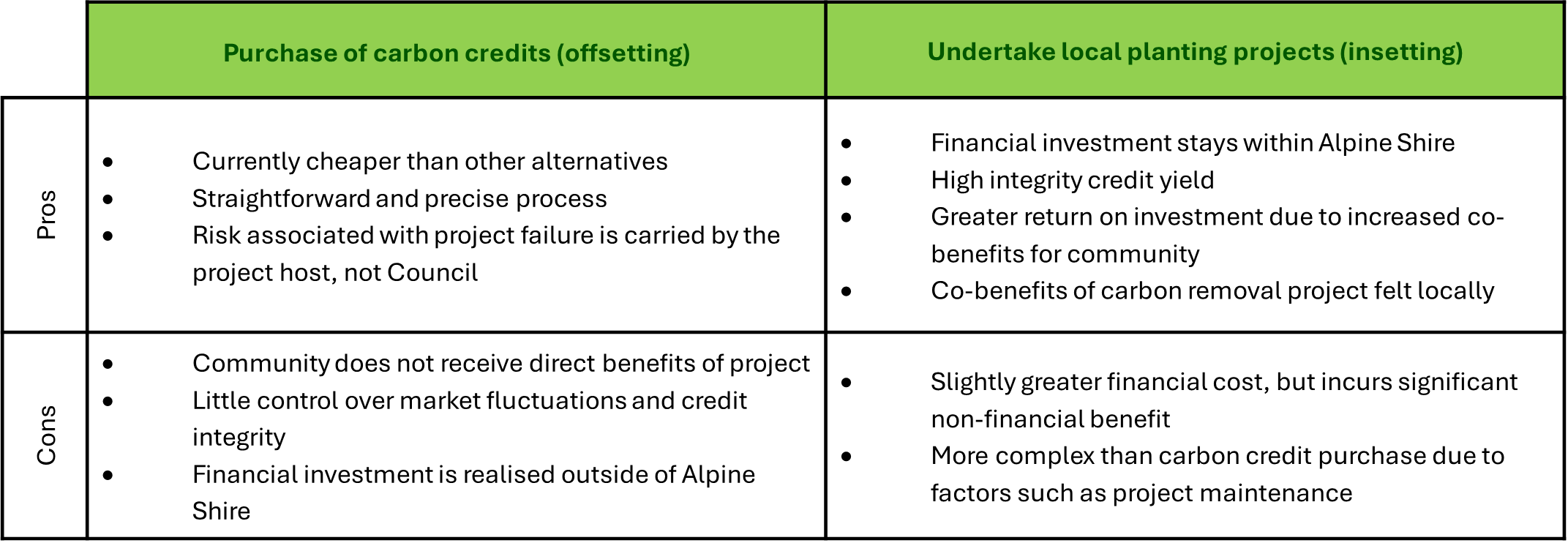
Pros and cons of identified methods include:
Online
- Complete the survey here on this page by scrolling down
In-person
- Complete the survey in person at one of our libraries in Bright, Mount Beauty, or Myrtleford
- Come and see us in person at our market pop-ups - we will be hosting one in each valley!
- Want to talk to us but don't see a place / time that suits? Feel free to contact us and we can arrange a time for one-on-one engagement with a Council officer.
Our Net-Zero Journey